Language learning apps like Duolingo are becoming increasingly popular among casual language learners. Duolingo is even listed as the number one education app on the App Store. It is fun, quick, and rewarding. But will services like Duolingo eventually replace classroom learning?
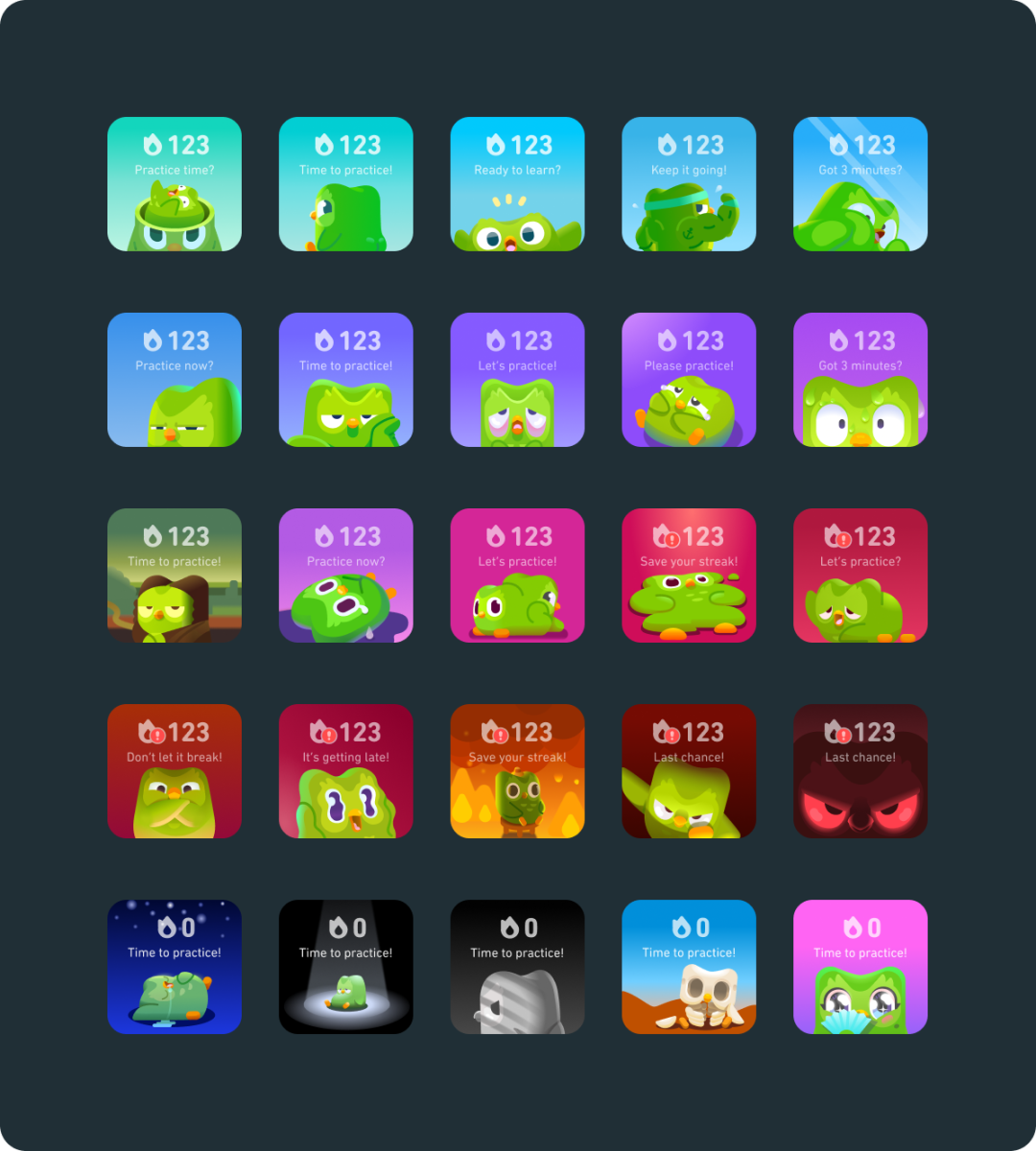
The Duolingo website states, “We believe that anyone can learn a language with Duolingo. Our free, bite-size lessons feel more like a game than a textbook, and that’s by design: learning is easier when you’re having fun.” Duolingo is structured in a game-like format: levels, gems, XP, and leagues all add to the experience. Eleven recurring characters, developed through stories and podcasts, give users a sense of familiarity. In addition, Duolingo uses a myriad of different lesson types (fill-in-the-blank, composing sentences, matching words, listening exercises, speaking exercises), which create enjoyable variability. These features keep learners coming back. From meme-worthy notifications to emails to widgets (see below), it strives to keep its users engaged and returning.
Other motivational techniques push learners to go the extra mile. Leagues (which range from bronze to diamond) create competition, encouraging users to stay active to avoid demotion or earn promotion. Daily and monthly quests encourage learners to hit short-term milestones and complete certain lesson types to earn gems, XP boosts, and badges. Another benefit is the cost: Duolingo is free. While there are paid upgrades available, a core part of the Duolingo mission is universal accessibility: anyone can use it. This expands Duolingo’s global customer base, something classroom teaching can’t even begin to match.
The defining feature of Duolingo is the streaks. Learners must complete a lesson every day to keep their streak alive. Streaks can be seen as both a useful and harmless motivational tool, or something more sinister: a psychological tool to keep users coming back even if they don’t really want to learn anymore. Long-time Duolingo user Aiden Yuan ‘27 said, “I think it helps me learn to a certain extent because, truthfully, I only do it for the streak. I’m currently at 1331 [days]. I think at this point I only really do it for the streak, and I end up doing really easy lessons because of that.” At a certain point, Duolingo becomes less of a learning tool and more of a daily game, severely undermining the core mission of the platform. Additionally, streak freezes add a new psychological layer to Duolingo. Former Duolingo user Helena Zhai ‘27 said, “Duolingo allows you to have streak freezes and purchase them. It’s a little bit toxic because that keeps you hooked on Duolingo. It makes you chase the joy of keeping a long streak rather than learning the language.”
Duolingo has other downsides as well. The gamified experience leaves less room for grammar, both complex and foundational. Instead of structured lessons, users learn grammar in a more immersive manner, kind of just figuring it out as they go. Duolingo also leaves out cultural components of language learning that make the experience incomplete. The sentences it asks users to translate are often bizarre and impractical (“Owen is eating parsnips in the rain” or “I want to live in your shoes so I can be with you every step of the way”), making it feel less legitimate and helpful. By making users learn with unrealistic sentences or phrases, Duolingo creates a certain degree of separation between Duolingo usage and practical usage. Finally, a lot of Duolingo consists of multiple-choice questions or sentence construction with the words already written – oftentimes, logic is sufficient for answering the questions. While there is nothing bad about logic, it cuts around the actual language learning part of the exercise, severely diminishing from its utility.
Classroom learning also has benefits and drawbacks. The most obvious example of its advantages is the presence of a teacher. Teachers can more easily modify their explanations for a deepened understanding of the material. They are also an exceptional resource for answering questions and facilitating constructive conversations. Especially in language classes, being able to engage in conversations in a foreign language with classmates is an integral part of the learning experience. Furthermore, classroom learning provides a structured, focused environment that makes learning easier for students. Class resources like textbooks and readings create a more varied learning structure. However, a more rigid curriculum and less personalized learning can create some difficulties for students. Classroom learning also takes up a significant amount of time, while its online counterparts are designed to be used in small increments of time.
Ultimately, both language learning strategies are useful for a more complete experience. Duolingo can help with more casual instruction and requires less of a time commitment. A gamified experience keeps users coming back. However, classroom learning will probably remain the leading tool for students, as having a clearer lesson plan and more explanations provides a more comprehensive view of the language.