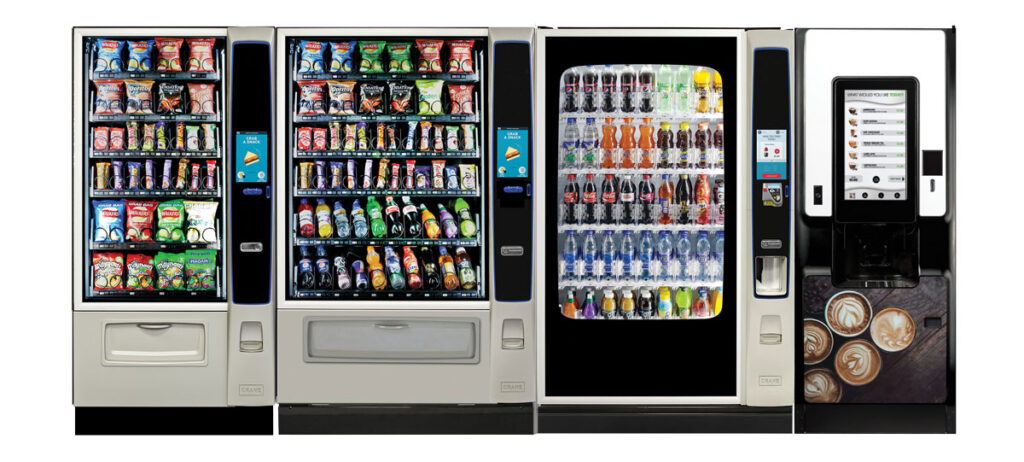
Every day, Potomac’s Upper School students flock to the vending machines. Whether it be in between classes, during break, or before sports, these machines have become a necessity for students seeking a quick and convenient bite to eat. Currently, each snack is priced at $2.25, and each drink is $3.00. While these prices may seem reasonable at first, many students feel that they do not reflect the overall value of the items being sold.
Each snack machine contains a variety of options for a student to choose from. Not only do the tastes and ingredients vary, but the sizes do as well. Initially, this diversity sounds ideal. However, relatively high prices for items with smaller serving sizes often lead to frustration. Senior Claire McEwen shared her frustrations on the subject, stating, “I don’t think I should be paying $2.25 for four bites of Welch’s.” Her comment reflects the perspective of many other students: that what they pay does not match what they receive.
Additionally, Claire expressed her dislike for the process of purchasing from the machines: “Sometimes I decide to spend the money on a snack, and after I pay, I don’t even get the item because the machine is broken.” The risk of losing money to a faulty machine only builds on pre-existing student frustrations, and can make a simple purchase feel stressful.
The most major concern, however, clearly surrounds the uniform pricing of all items sold in one machine. For example, sophomore Marissa McEwen noted that “the pricing is so annoying. The granola bars should be less expensive than the chips,” raising questions about the logic behind the costs. Although equal prices may be due to the school’s or vending machine companies’ desire for easier transactions, it creates a sense of unfairness. When all items cost the same, regardless of factors such as size or brand, certain products start to feel like a “waste of money,” according to Marissa.
The vending machines at school have the Upper School community as a “captive audience,” meaning that the people who use them (mostly students) have limited access to alternative options. Because students are on campus for long periods of time, they are often “stuck” with whatever the vending machines have to offer. This makes the fairness of pricing even more relevant. When students have no realistic alternatives, overpriced, small-portioned foods can feel exploitative.
Vending machine companies are able to capitalize on the convenience of their machines, relying on the fact that students care more about short-term hunger and accessibility than they do about prices. In fact, many vending machine companies follow the “2X standard,” which justifies the markup to be double the original cost. This means that if a vendor purchases an item for $1.50, it is typically sold to consumers for around $3.00 in order to generate a profit and cover expenses. While it is reasonable for machine items to cost more than the original, the lack of price variation between items of different sizes and values at Potomac makes the markup feel less justified. Because all items are marked uniformly, the 2X standard allows smaller or lower-cost items to be disproportionately expensive.
This struggle is not unique to Potomac. On average, each vending machine across America generates around $500 per week from student spending, proving the significance of the 2X markups. What may feel like a small jump from $1 to $2 can quickly accumulate into a large profit. Furthermore, if a student repeatedly purchases from the machine out of convenience, the costs will inevitably multiply. Although time is valuable, it should not be a substitute for money. Students deserve pricing that matches what they can afford and what they are receiving.
While student concerns are valid, it is also important to consider the motivations behind why the prices are chosen. According to Potomac’s Chief Operating Officer Ross Davis, the machines are managed by a third-party vending company, Canteen. Davis says that because school vending machines typically generate less traffic than areas such as airports or shopping centers, Canteen raises prices to compensate for shipping costs, delivery, maintenance, and expired inventory.
Additionally, Davis commented that simplified pricing is a strategy used by not just Canteen, but other vendors in order to make the transaction process more efficient. From the school’s perspective, the goal is to provide convenient access to snacks and beverages while maintaining a program that is practical to operate. Davis also noted that the school is mindful of student concerns and is open to feedback.
If students perceive the costs of on-campus vending machine drinks and snacks as “overpriced” or “inconsistent,” the machines risk failing to serve their intended purpose. While business realities make uniform pricing and portion size practical, student concerns about value and fairness should still be addressed. Looking forward, there is an opportunity for the school and students to work together to develop a more balanced system that maintains a sustainable program while still promoting accessibility.