For many years, all Potomac Upper School students participated in Family Groups, a program led by the Student Diversity Leadership Committee (SDLC) that focused on topics ranging from DEI to civil discourse to bystander intervention. While the program was designed to build awareness and community, students had previously expressed frustration over the repetitive nature of the curriculum across all four years. Furthermore, SDLC Student Leader Julia Saba ‘26 shared, “My issue with the [previous] structure was that our universal programming assumed that a 14-year-old or freshman, and an 18-year-old senior, shared the same level of cognitive maturity and worldview. I thought that was antithetical to Potomac’s mission of growing our perspectives as students and about the world around us.”
So this year, Potomac is trying something new.
Saba brought this frustration to the Upper School Administration last year. Taking inspiration from Mr. MacDonald’s current events discussions in his sophomore Modern World History classes, she hoped for a change in Family Groups, “where we can debate actual pressing issues in a safe space and practice and apply the skills that we’ve learned early on.” Additionally, Mr. Austin Davis, Assistant Head of the Upper School and Upper School Director of Student Life, pointed to two election-day assemblies held last school year by students from clubs such as Young Democrats, Conservative Conversations, and the World Events Club. “People really liked being a part of it,” Mr. Davis explained, noting that several students later approached him asking if similar political programming could continue.
These notes ultimately led to the creation of Forum: a program that replaces Family Groups for juniors and seniors. Mr. Davis emphasized that Forum was intentionally designed not as a departure from Family Groups, but as an extension of its goals. While Family Groups in 9th and 10th grades focus on personal identity development, Forum allows juniors and seniors to apply those foundational skills to complex, real-world issues.
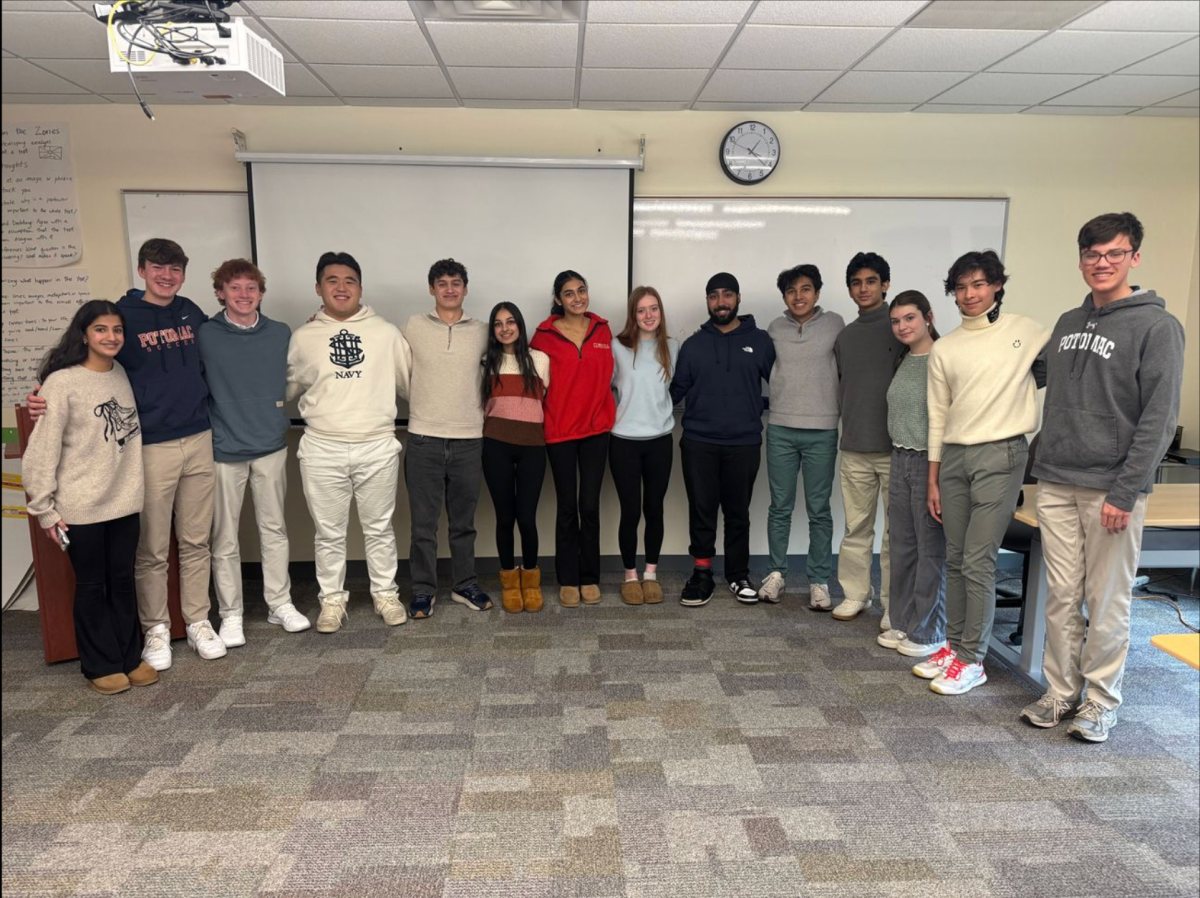
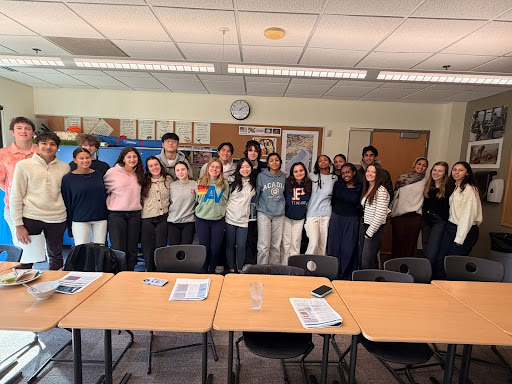
Interested students were formally trained by the Close Up Foundation, a nonprofit, nonpartisan civic education organization based in Washington, D.C., to become Forum session mediators and facilitators: Forum Leaders. Throughout the training, Forum Leaders learned how to be good mediators, structure effective deliberations, guide peers through nuanced issues, and much more. The Close Up Foundation provides Potomac with detailed information packets, which fuel the discussions, providing a nonpartisan base of information for all students prior to the actual discussion. Each packet details the current state of the issue being debated alongside potential policies related to the issue. Students are recommended to mainly make decisions based on the information given, and the ultimate goal of the session is to at least reach a partial consensus upon specific ways to address the issue.
Student Brynn Windisch ‘27 noted that “Forum is doing a really good job at…bettering our critical thinking and discussion skills.” Cait Toop ‘27 highlighted her appreciation for Forum: “As students attending a private school, our environment can be sheltered. The sessions give us a chance to look beyond our own perspective, learn about modern topics, and, at least begin to, overcome our ignorance.”
However, there are a few concerns about the new program, as well. Windisch stated, “I think maybe some topics that people are more passionate about and interested in would help get more participation.” Forum Leader Darya Mirali ‘27 shared similar positive sentiments and added that “the way the policies are structured, and how we can’t get research to back them up [has] become a problem in my group because we want to [better] understand the status quo.” Lastly, Toop spoke, “While compromise is an invaluable tool, its ideals must coexist with an understanding that some things are right and others are wrong. Forum should encourage each individual to share their voice and opinion, but it is crucial that we do not fall victim to false equivalence.”
Steering away from principles and hypotheticals, Forum centers on current events that students likely have been exposed to outside the classroom. The first Forum deliberation, held on October 29, addressed the issue of homelessness, and the second, held on December 2nd, addressed gun control. The next discussion will cover the topic of immigration, demonstrating a gradual shift into more controversial topics. (Forum was intended to be held on January 27th but has been postponed until further notice due to a snow day.) The replacement of Family Groups with Forum in 11th and 12th grades marks a significant change in one of Potomac’s key curricula: rather than adults leading conversations, students lead their peers in deliberations that require critical thinking, an open mind, and the ability to engage constructively with opposing opinions. Ultimately, Forum is a new direction for Upper School programming with the goal of helping students practice the essential skills of civic engagement and productive conversation within Potomac and beyond.