Being an artist isn’t as pretty as I thought it would be. Instagram floods my feed with clips of smooth brushstrokes and perfect tape peels accompanied by ethereal violin melodies, but the timelapses hide the hours that go into each piece before paint even hits the canvas, and layers upon layers of indecision and revision are perfectly flattened in the photos. There’s no classical music playing in my studio, just Arrested Development. And as I stoop over my work, a tattered scrap of sandpaper clutched in my aching, dirty hands, I think to myself, It’s a good thing I don’t do art for the money, because this would never be worth it.
So why do I do it? Well, for me, that’s pretty simple–I do it for the product. As I gaze upon the piece that nearly drove me to insanity, the hours of toil fall away. The emotional highs and lows, the grooves sanded into my fingernails, and the calluses lining my palms are all worth it if I can say I made something good. And that right there is the real question: what makes art good?
I’ve come to terms with the fact that I’ll never be able to define art. I can’t know the creator’s intention or tell if a seemingly mundane object carries some special history that makes it unique. What I can do, however, is decide if a given work is good art. But to do that, I need a system of judgment that can be applied to all art, or at least all visual art. The question isn’t what makes me like art. This goes beyond just my interpretation. This is objective. And really, if you think about it logically–and for as long as I have–it becomes clear that only three things matter when evaluating the quality of a work of art.
First, and most obvious, is aesthetic: art should look nice. This is the oldest and purest intention behind art. It’s decorative, luxurious, a sign of wealth–on an animal hind-brain level, art is a status symbol, like an exotic bird sprouting ostentatious tail-feathers to prove its genetic viability. Art fulfills the instinctual urge to appear beautiful.
Second is effort. “Art” is another word for “craft,” and we should treat it as such, as the practice of a skill honed through years of experience. A good art piece shouldn’t be able to be replicated by any passing schmuck. It should represent an investment of time and energy. It should carry an air of value because its creation was worthwhile to someone.
Lastly–and I will admit that I’m still a little uncomfortable with this one–meaning. Art should carry some deep significance, evoke a feeling, send a message. This category, sadly, still needs to be evaluated with some level of subjectivity, but I think an understanding of context and cultural reference takes you a long way without bias. As long as you can get something out of it at a higher level than the literal, you can say a piece of art has meaning.
We can’t expect perfection, so let’s say that good art is passable in all three categories, but if a piece is exceptional in two, we’ll forgive the third. Thinking about art within this system is so beautifully simple. Pick any artwork–three easy steps, and you’ll know if it’s worth your time.
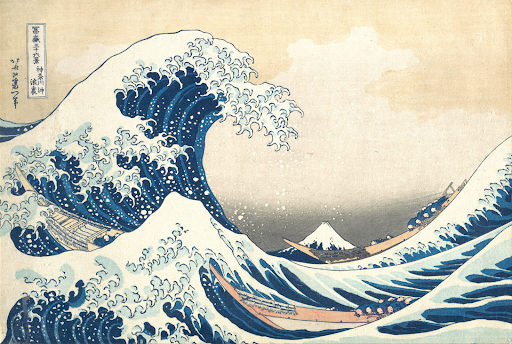
Hokusai, The Great Wave off Kanagawa. Aesthetic: 10/10. Effort: it’s a woodblock print that uses several colors, so likely considerable. Meaning: it definitely makes me feel something, so I would say medium. Good art.

Leonardo Da Vinci, Mona Lisa. Aesthetic: decent. Effort: evident. Meaning: it’s a commissioned portrait of a noblewoman, so probably not much. A solid piece, if not the best in history.

Jackson Pollock, Number 1 (Lavender Mist). Aesthetic: it’s just not very pretty. Effort: seems low. Meaning: I can’t make anything of this. The verdict: not good.
And great news for those among us who have been losing faith in humanity: the rubric works just as well on contemporary art.
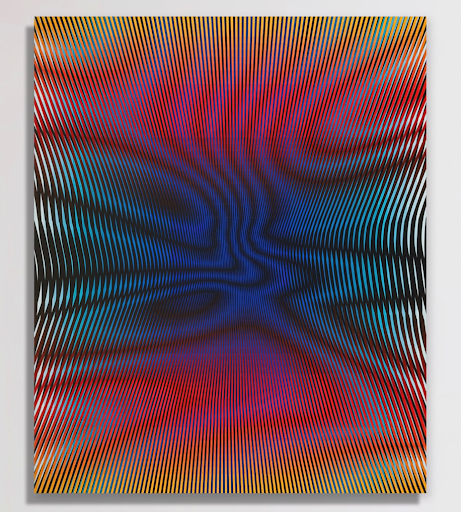
Enzo Prina, VESUVIUS. Aesthetic: absolutely mesmerizing; I have trouble looking away. Effort: intense. Lying down the strips of tape alone would take me years. Meaning: unclear. Overall, a good piece of art.
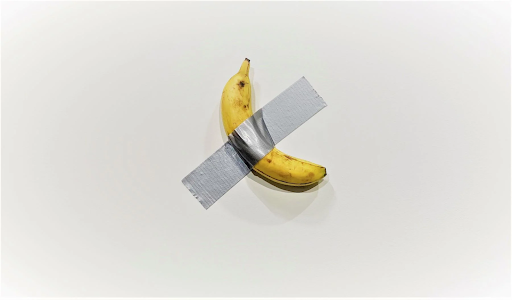
On the other hand, look at Maurizio Cattelan’s Comedian. Aesthetic: awful, except maybe in a contrarian, dystopian way. Effort: Is “negative” an option? Meaning: this one gets complicated, because it’s supposedly critical of contemporary art, but I eventually settle on low to none–any social commentary present is poorly delivered, and anyway voided by the work’s commercial success. Bad art.
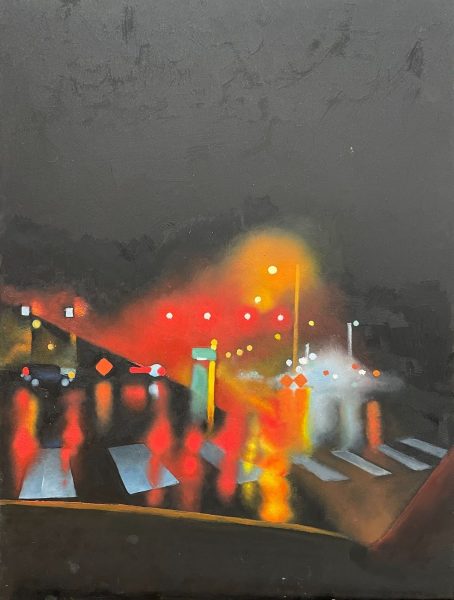
Lastly, let’s get personal: Cars in the Rain II, by yours truly. Aesthetic: I think it’s nice. Effort: you probably can’t tell, but I spent months on this piece, blending and scraping off and repainting each haloed streetlight. Meaning: I hope you agree that it evokes a feeling–maybe something peaceful, but also like life is passing you by. So yeah, I think I succeeded this time around. Pretty good art.