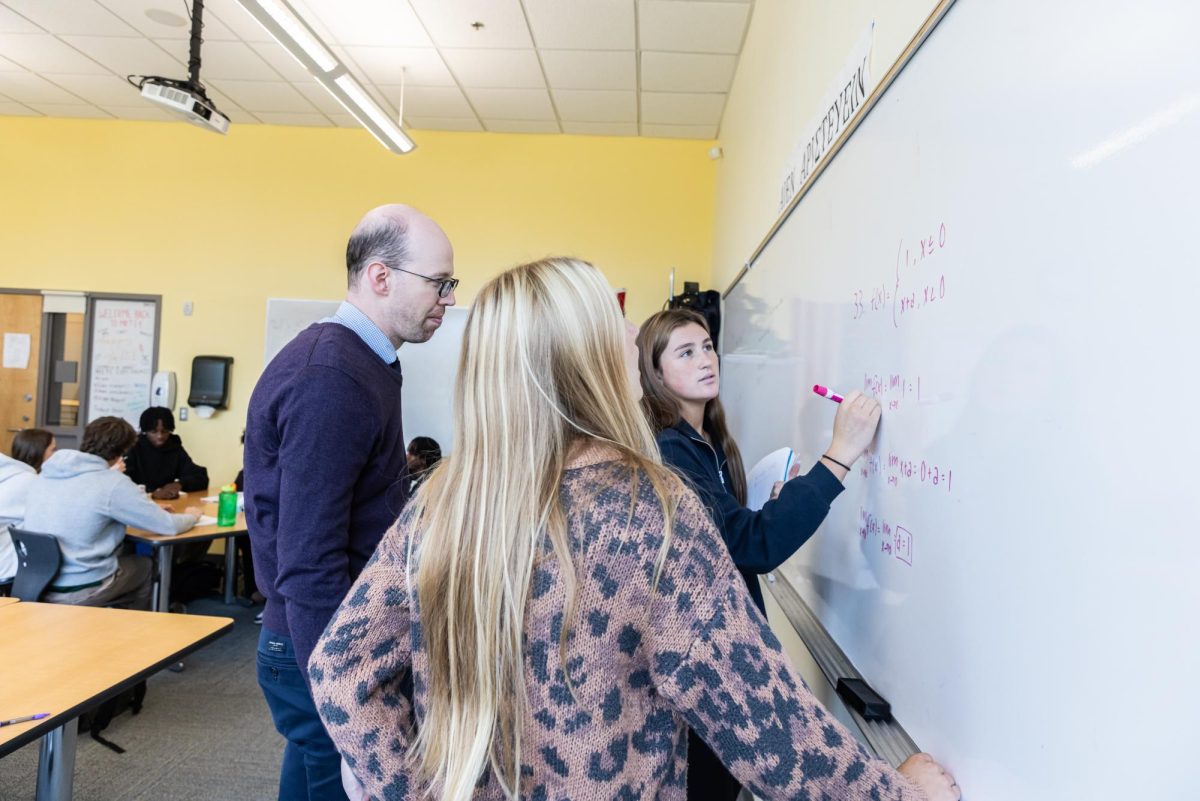
As the Middle School building grows larger by the day, it has begun to spark increasing curiosity. On Tuesday, February 24th, the Advanced Architecture students–myself included–toured the grounds of the construction hosted by Joanna Schmickel (CGS Architects) and Kyle Erickson (Davis Construction Team).
We began in the Arundel Library, reviewing the BIM (Building Information Modeling) for the Middle School while the architects and construction team discussed their use of AI throughout the planning and execution of the project. Lexa Rio, an associate at CGS Architects, advised against AI “if [one is] not an expert already in that field” because architecture projects still need enough expertise to fact-check AI. Erickson continued the conversation, adding that he used AI to calculate numbers for material deliveries and the number of workers entering the premises, which also helps inform the Evermay neighbors and keep them in mind throughout the construction. Although AI is a great tool for quick calculations and estimates, the architects agreed that it is better to design with one’s own thinking and consideration. Schmickel concluded the discussion by noting that one needs to have “empathy for [the] people using the space” when designing and planning.
As they continued walking us through the BIM, they opened up a new module that showed a digital walkthrough of their construction site. This equipment is called a ‘Total Station’, which constantly updates and allows them to view details of their construction without going back and forth between the office and the site. In addition, this tool helps with layout organization, bringing the blueprint lines to life.
While walking through the site, the construction team addressed the challenge posed by January’s big snowfall. The freezing temperatures created an unsafe working environment, so the team had to focus on snow removal, losing “around 3 days” of construction. The team explained that four days prior to the snow, they had poured the concrete slab onto the prepared ground, which accelerated the snow removal and kept them closer to schedule.
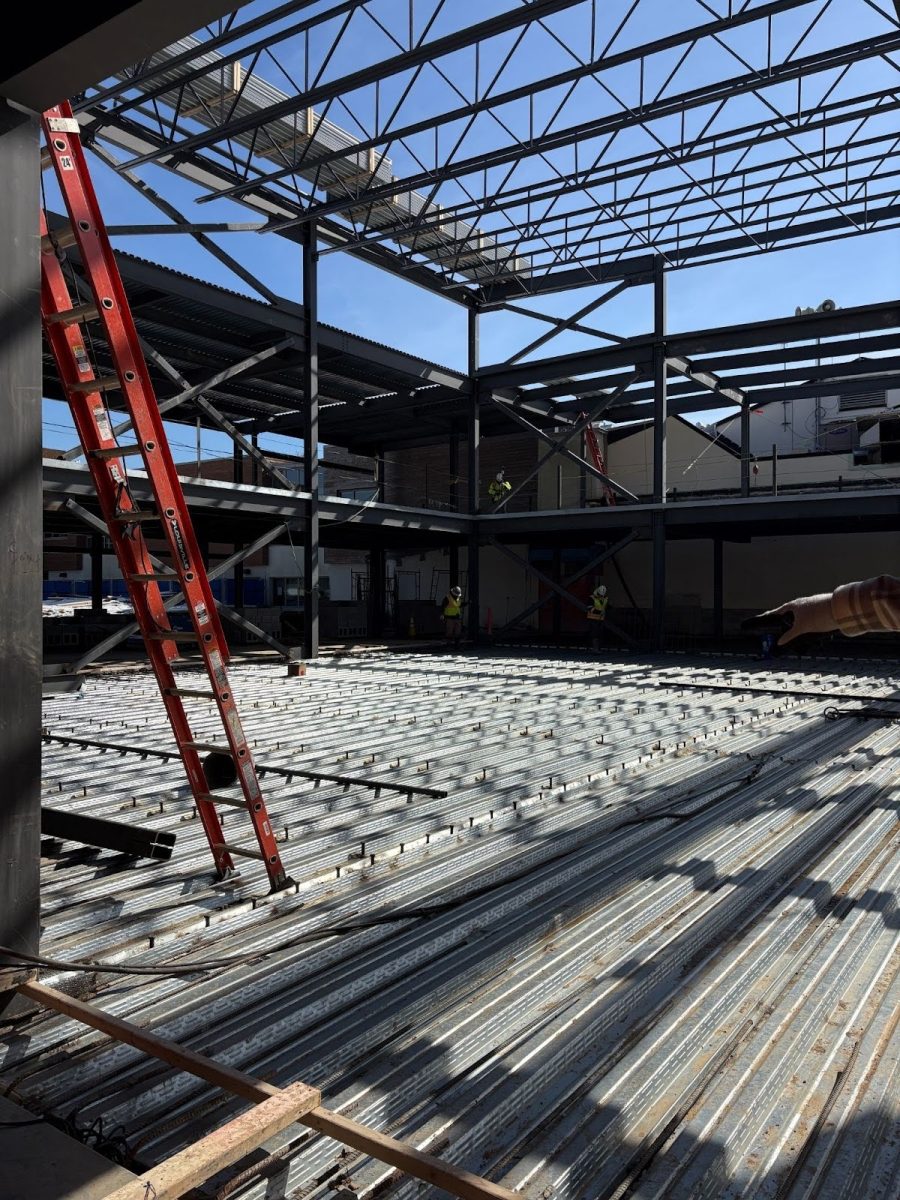
Continuing the tour, we were able to see the structural framing for some cool aspects of the Middle School, including the gym and the mezzanine above, the niches for the bathrooms, and the spaces for the new classrooms. I personally noted some of the classrooms and open areas on the top floor that had huge window spaces; these windows will not only let in lots of natural light but also allow nature to be part of the room, building that bridge between the outdoor and indoor spaces of the Middle School.
Reflecting upon the experience of touring the growing Middle School, architecture student Dasha Minsky ‘26 felt inspired by “the excitement of the architects.” Currently, Dasha is working on a piece with a very similar feel to Frank Lloyd Wright’s “Falling Water,” which also bridges the gap between indoors and outdoors. Another architecture student, Pearce Kellett ‘28, felt “surprised by all the meticulous planning” going into the construction. The construction team mentioned how the measurements of features, even large ones like the big columns, would be precise to even an eighth of an inch– “[fitting] like a glove”. Other attentive details included the architects’ considerations of the music room and gym floor layouts, which have larger spaces between the groundwork and where the floor would go. Schmickel classified the floors of the gym and music room as ‘sprung floors,’ which have a “shock-absorbing” system that minimizes the impact on the joints as kids move around. Additionally, the space provided an “acoustic separation,” creating a sound barrier so that noise from the gym or music room does not carry as far as it would in any other room.
The construction tour shed a new light on the deliberation process in architecture. Architects must use their own thinking to ensure intent with their projects, plan around smaller aspects like joint impact, and consider the setbacks that are always bound to happen. There is much consideration in the process of architecture because it is where art interacts with people and nature. Architecture is the creation of a space for the soul of a community, and it is safe to say that CGS Architects understands that.