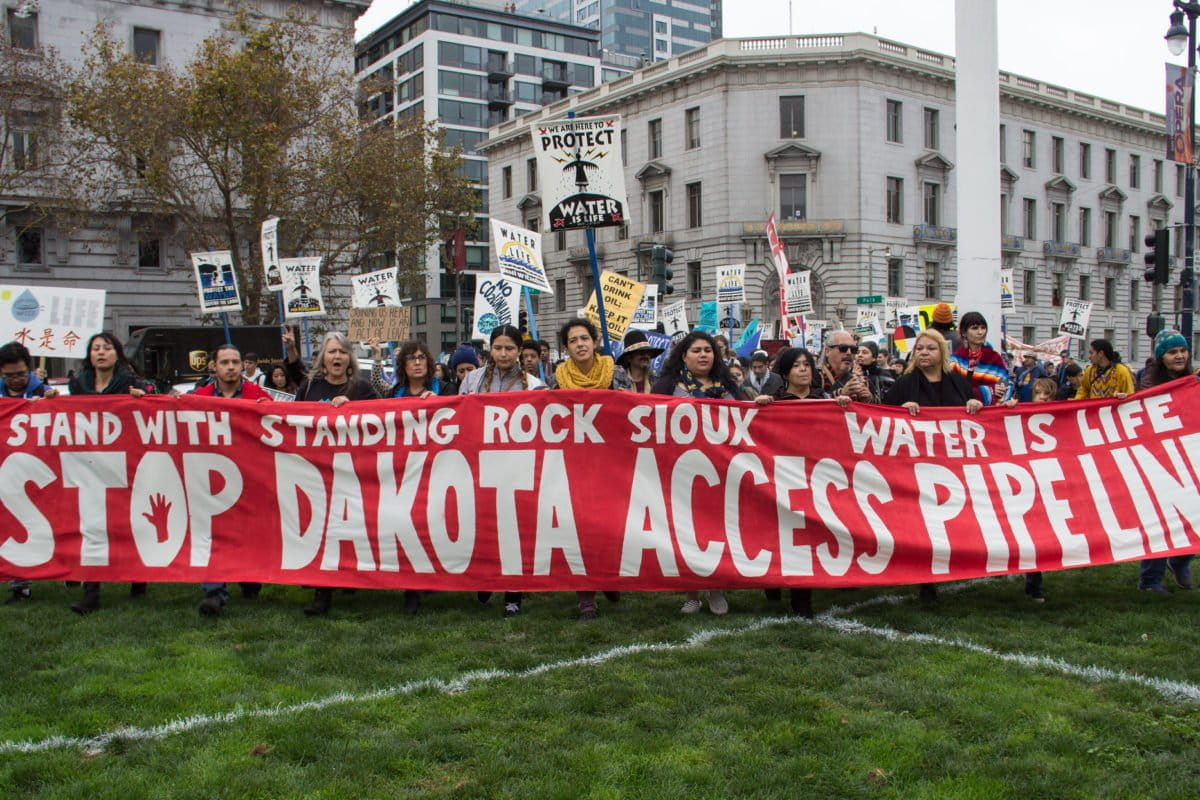
Crowds waving tribal flags high and proud in the air. Allies of other tribes and origins arriving from all across the nation. Long-term camps stand resilient with fulfillment and dignity. Around a decade ago, in April 2016, these demonstrators unified under the title “water protectors,” creating chants, hymns, and camps to protest, centered on a single phrase: “Mni Wiconi: Water is Life.”
The Standing Rock Sioux Tribe undertook a long and arduous battle with Energy Transfer Partners (ETP) about the construction of a multibillion-dollar oil pipeline. As ETP began constructing the Dakota Access Pipeline (DAPL), Standing Rock Sioux leaders realized the pipeline was set to cut through the Missouri River. Although ETP claimed construction was legal and that oil spills would be minimal, the Standing Rock Sioux Tribe refused to risk contaminating their downstream drinking water.
Anna Lee, a member of the Standing Rock Sioux, wrote in a letter at thirteen years old, pleading to stop the construction of the pipeline: “If the pipeline breaks, the oil will spill on the ground and into the water. Grass, crops, trees, and animals will not be able to grow and live because of the oil. People will not be able to drink from the river or use the water…Water is the first medicine to Native American people. Mni Wiconi: water is life.”
As tribe members started protesting, the message spread through social media, reaching political figures that included Bernie Sanders and Jill Stein. By November 15, 2016, the #NoDAPL Day of Action convened 300 solidarity events spanning all 50 states and international cities such as Paris, Auckland, London, Kyoto, and Marrakesh. Native Americans from across North America, fellow activists, and many others touched by the movement all came to stand with Standing Rock, congregating into one of the most successful instances of unity for Native American justice in U.S. history.
While the protests successfully halted the construction until November 2016, the Trump administration passed an executive order fully permitting the construction of DAPL. However, their efforts were far from a loss. Honoring the 10 years since the Standing Rock protests serves as a reminder that Native Americans, so often isolated in their fights, do not have to stand alone—a testament to how universally understood and true the message was: Mni Wiconi. Activist Mekasi Horinek asked, “Don’t you drink water, too?…Don’t your children drink water, too?” The answer turned out to be yes, and for an unprecedented moment in Native American history, the rest of the world showed up to prove it.