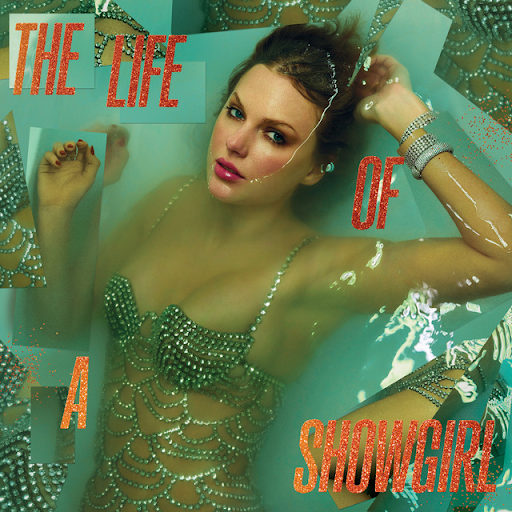
Taylor Swift topped the charts yet again, amassing over 720 million streams for her single “The Fate of Ophelia,” featured on her twelfth studio album “The Life of a Showgirl.” Inspired by Shakespeare’s Hamlet, Swift reimagines Ophelia’s “fate” for a newer, younger audience. But really, how accurate is her representation of Ophelia’s story?
Ophelia’s story begins when she falls in love with Prince Hamlet. However, her brother objects to their relationship, claiming that Hamlet’s intentions with Ophelia are not pure. Her father listens and forbids her from seeing him. Ophelia, seeking male approval, obeys and ends her relationship with Hamlet.
Later on, when Ophelia sees Hamlet again, he is pretending to have gone mad after his father’s death. Under the guise of “acting crazy,” Hamlet insults Ophelia, leaving her heartbroken and confused. Ophelia’s brother and father decide to investigate his madness, pushing Ophelia to act as their “spy.” Ophelia reluctantly agrees. While spying, however, Hamlet mistakes Ophelia’s father for his nemesis and kills him. The loss of her father leads Ophelia to go mad. She sings strange songs, hands out imaginary flowers, and speaks unclearly. She dies by drowning soon after, floating in a river surrounded by flowers.
Throughout Ophelia’s story, she is constantly controlled by the men in her life. Ophelia’s sweet, innocent character reinforces her own vulnerability, ultimately allowing her father and brother to make all her decisions for her. Because Ophelia is never given the opportunity to express herself, her father’s death leaves her with no identity or guidance. Although the townsfolk refer to her as “mad,” Ophelia is feeling more lost than anything. Her whole life, Ophelia has been taught that men should be allowed to make decisions for her, no matter their impact. Her strange actions after her father’s death are a result of the confusion she’s feeling from having to be independent. Shakespeare uses Ophelia’s character as a representation of how allowing others to control you leads to tragedy. Ophelia also serves as a criticism of the patriarchy, which pushes women to be helpless without men. Despite being inspired by Ophelia’s story, Swift undermines the message by casting a male savior.
“The Fate of Ophelia” tells the story of a woman who is suffering from her own sadness, but is “rescued” by a man. Throughout the story, the singer expresses her love and gratitude to the man. Swift introduces the male character in the song by saying he “Saved my heart from the fate of Ophelia.” This line indicates a misunderstanding of Ophelia’s fate. Swift’s lyrics suggest that Ophelia’s fate was simply her death, rather than the lifelong loss of independence that led to it. This misunderstanding leads the song to frame Ophelia’s story as tragic only because it lacked a man’s love. Swift describes that she “swore my loyalty to me, myself, and I” until the man “lit my sky up.” This suggests that the singer is not complete until the man enters her life. Additionally, it states that the man’s love can replace love for oneself, meaning that the man’s love is more important than self-agency. Even though Swift’s song is meant to be an interpretation of what could have happened if Ophelia had been “saved,” it instead contributes to the cycle of control that Shakespeare warned against.
Later on in the song, Swift describes the woman’s full dedication to the man. She says that she will “pledge allegiance to your hands, your team, your vibes.” But by “pledging allegiance” to the man, the singer indicates that her emotional identity is placed in his hands. This continues the idea that a man’s control is necessary for a woman’s happiness. In reality, these lyrics do not accurately represent Ophelia. Ophelia was a confused young girl who suffered greatly from relying on others to make her choices for her. Instead of showing the importance of independence, Swift reinforces the narrative that men controlling women’s emotional well-being and decisions will result in women’s happiness.
Swift transforms Shakespeare’s story about the dangers of patriarchal control into another song about how men can fix all of women’s problems. Ultimately, “The Fate of Ophelia” may be a good pop song. Still, it fails as a meaningful representation of Shakespeare’s tragedy and fails to warn listeners of the importance of autonomy.