![Why Do [They] Do This, Perhaps You Ask:](https://potomaccurrent.org/wp-content/uploads/2025/11/59298293-A1C3-451F-BCF6-FE44AB9A6E80_1_102_o-1200x900.jpeg)
On first inspection, the Latin classroom (E215) can seem like a pretty regular place. No colorful posters showing how to say the names of various vegetables in Latin, or pictures of famous modern Romans, hang on the walls. If you look a little closer, however, you’ll see a lot more personality: a shelf full of tattered books that seem like they could be from antiquity, the words carthago delenda est scrawled in the corner of a whiteboard, and a small photo of Capitoline Hill in Rome on the wall by the door. This one room houses the entirety of the Upper School’s classics program. While Potomac’s classics program doesn’t necessarily have a huge presence on campus, it is a key part of the Potomac experience for a group of devoted students known as the Classical Society.
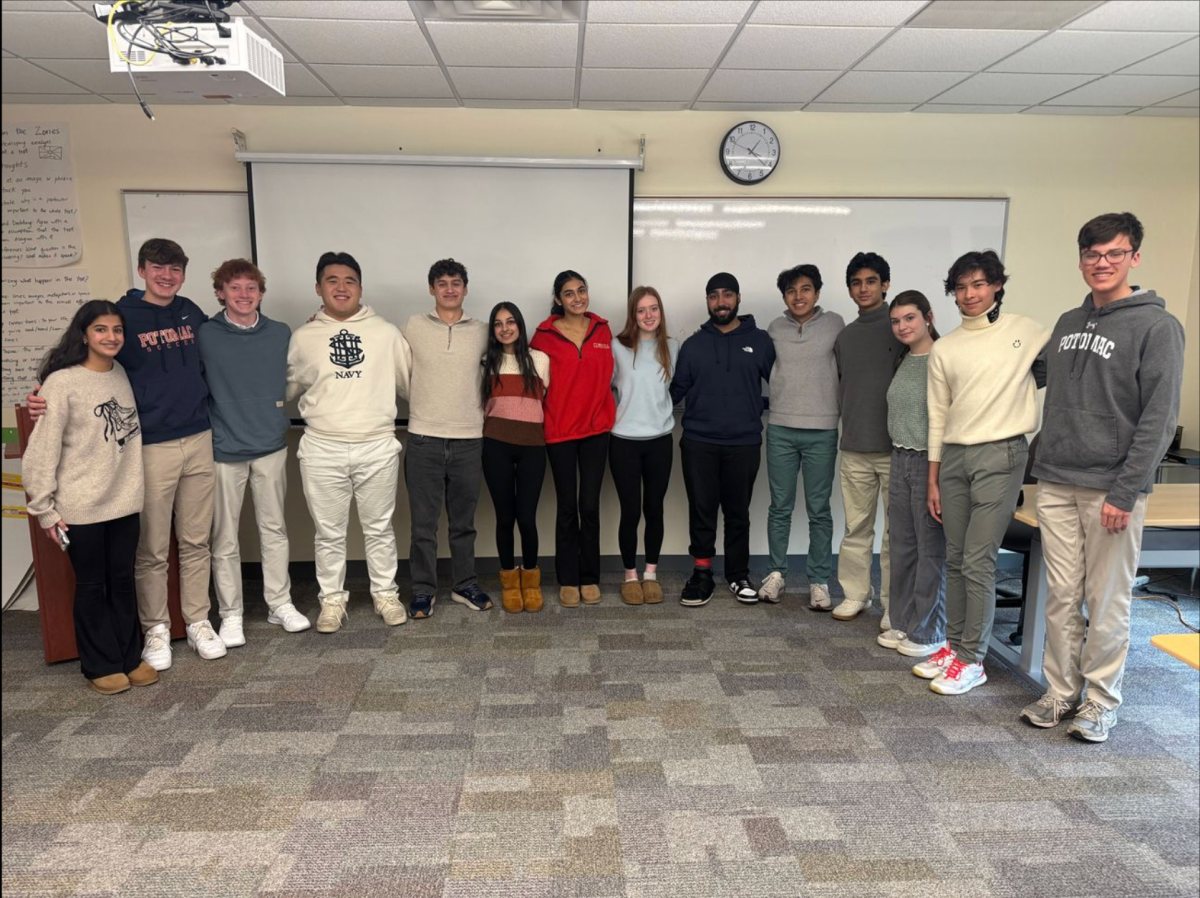
The group has two faculty advisors: Latin teachers Mr. Lillis and Mr. Dwyer, and four student leaders: Marin Brow (Marina Frons) ‘27, Grady Robbins (Grodius Robinus) ‘27, Santi Cangahuala (Marcus Muntius Muntius) ‘27, and Mary Parker Stump (Gaius Marius Caudex) ‘27, who were all elected in an unprecedented four-way tie last spring. If you ask any leader of the Classical Society what exactly it is, they’ll tell you it’s just a club for students who are interested in exploring ancient Greek and Roman culture; however, from my experience as a member and from my interview with Santi and Grady, I can tell you that it gets far stranger than a “regular” club.
Interviewing Santi and Grady was a rollercoaster ride. They seemed to instantly switch back and forth between being genuinely serious and pretending to be ancient Roman consuls (or, as they insisted was the technically correct term given that they are in a tetrarchy, “Caesari”) One moment, Santi told me that the Classical Society is “just a great space for those like-minded individuals to share that love and passion for the classics” and that it’s all about making sure that “people are continuing to learn and love Latin.” But the next moment, Grady told me that “the augurs saw a heron flying towards the east as their romantic rivals Phoebus passed by. They decided that the Heron would henceforth be a symbol of the society and a good omen.”
Ever since its founding in 2023 CE (or 2776 ab urbe condita), the Classical Society has been hosting fun, unique events to teach students about ancient Roman culture. Last year, there were quite a few highlights: the ludi plebii, a festival which included a footrace, chariot races, and viewings of Greek plays; the annual Saturnalia celebration; and an intense consular election, during which hundreds of campaign posters were hung up around the school.
At first, I struggled to understand what role the Classical Society plays on campus; is it really to educate students about classical languages and cultures, or is it a way for already passionate young classicists to have fun with and joke about ancient culture?
As I listened back to my conversation with Grady and Santi, it clicked.
The Classical Society unites students who don’t know a word of Latin and those taking the highest levels of Latin offered at Potomac. It’s about showing that learning about classics doesn’t have to be serious. Every Clubs B block, you’re bound to hear laughter and Latin echoing from E215.